
What’s the Big Deal About Simulation?
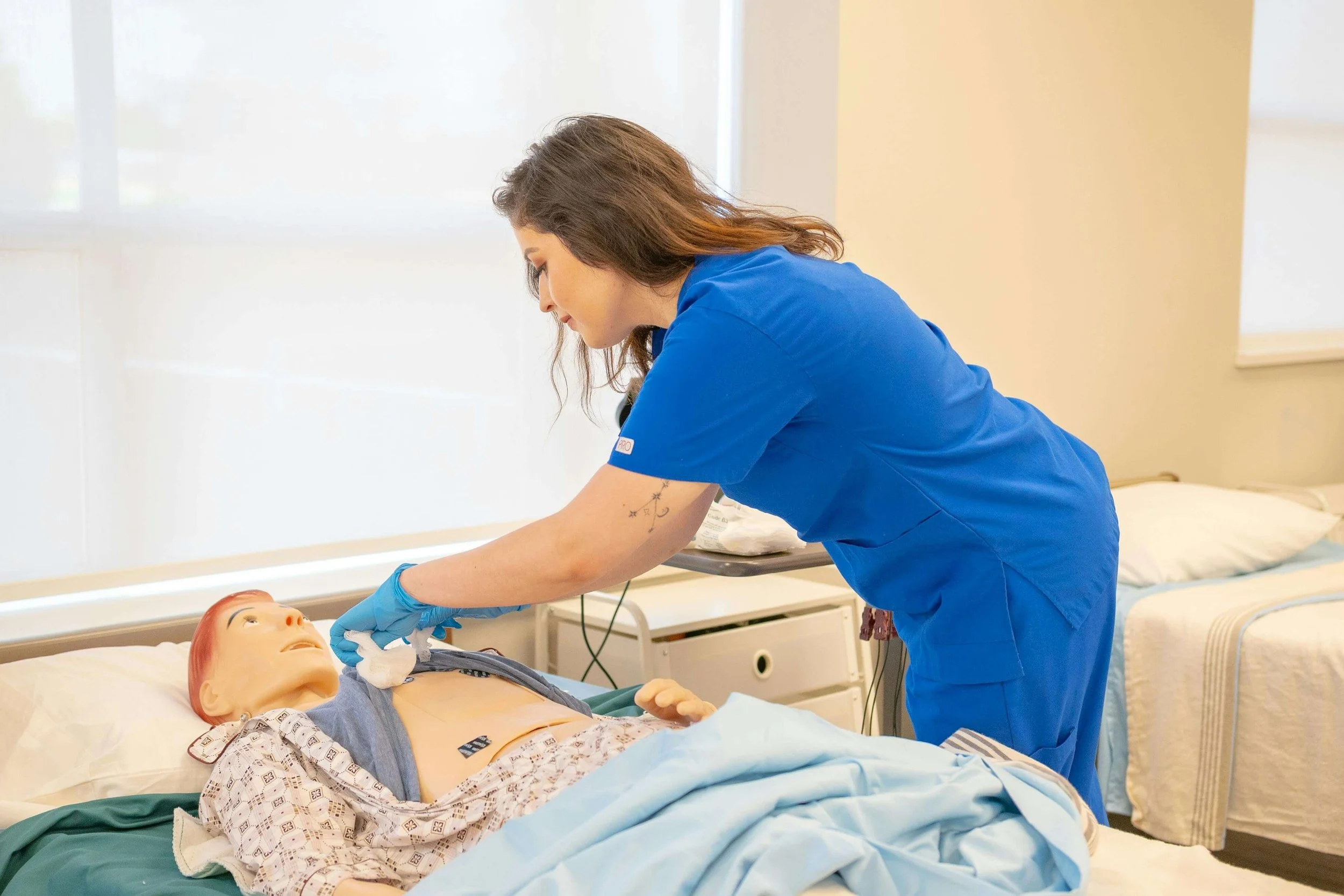
Why “sims” are such a big part of your nursing degree.
4 min read • Placement • Updated June 2026
If you've ever found yourself talking to a plastic mannequin while your lecturer watches from the corner of the room, you've probably wondered whether simulation is really worth the fuss.
The short answer: Yes.
Simulation has been part of healthcare education for decades. Early nursing skills laboratories used simple task trainers and role-play to teach procedures safely before students encountered real patients. Over time, technology evolved from basic models to high-fidelity manikins that can breathe, speak, bleed, seize and respond to treatment. More recently, virtual reality and screen-based simulations have added even more options for learning (Cant & Cooper, 2017).
Simulation isn't designed to replace clinical placement. Nothing can fully replicate caring for a real person. What simulation does offer is something placements often can't: a safe place to practise, make mistakes, and learn from them.
In a simulation session, you might be managing a deteriorating patient, responding to a medication error, communicating with a distressed family member, or working through a cardiac arrest. The scenario isn't really about getting everything right. It's about learning how to think, communicate, prioritise and work under pressure.
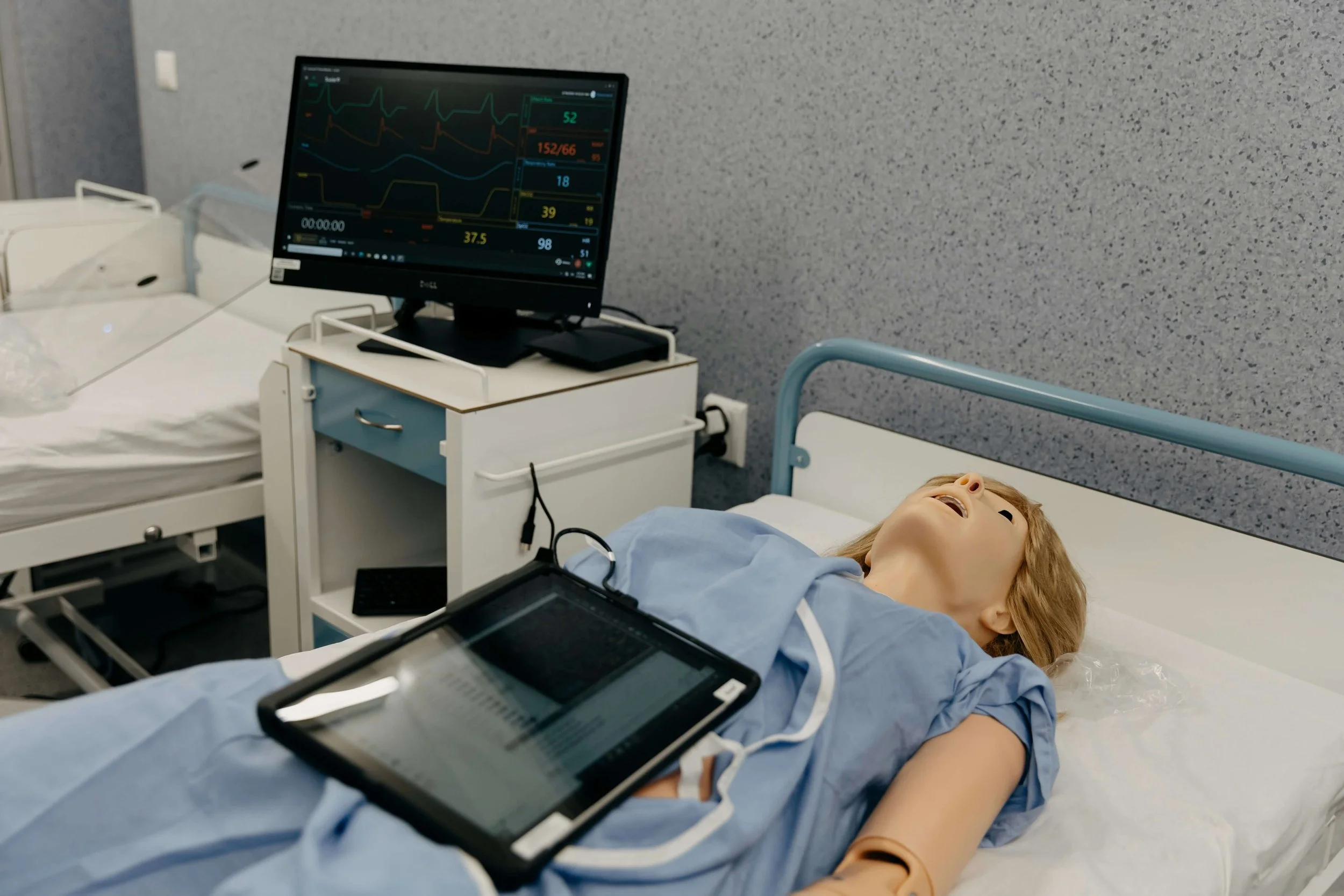
One of the biggest benefits is that simulation allows everyone to experience situations they may never encounter on placement. A student who spends six weeks on a rehabilitation ward might never see a medical emergency. Through simulation, every student can practise responding to high-risk situations before they face them in real life.
It also helps bridge the gap between theory and practice. Reading about sepsis in a textbook is one thing. Recognising a deteriorating patient and deciding what to do next is something else entirely. Researchers have consistently found that simulation helps students translate theoretical knowledge into clinical practice while improving confidence and clinical performance (Cant & Cooper, 2017).
The evidence supporting simulation is stronger than many students realise. A recent systematic review involving more than 3,600 nursing students found simulation-based learning improved clinical knowledge, practical skills and overall learning outcomes (Liu et al., 2024). Earlier research has also demonstrated positive effects on critical thinking, clinical reasoning, communication and decision-making skills (Mulyadi et al., 2021).
The part students often dread most is the debrief afterwards. Ironically, that's where much of the learning happens. Good debriefing helps you understand not only what you did, but why you did it. It can highlight strengths you didn't realise you had and identify areas for improvement before you're responsible for real patients.
So, what's the big deal about simulation?
It's one of the few places in nursing education where you're allowed to get things wrong… in fact, it's the whole point.
Because when you’re working with real patients, you'll be glad you practised first.
References
Cant, R. P., & Cooper, S. J. (2017). The value of simulation-based learning in pre-licensure nurse education: A state-of-the-art review and meta-analysis. Nurse Education in Practice, 27, 45–62.
Liu, Y., Li, X., Wang, H., et al. (2024). Effects of simulation-based learning on nursing students' educational outcomes: A systematic review and meta-analysis. Nurse Education Today, 141, 106313.
Mulyadi, M., Tonapa, S. I., Rompas, S. S. J., et al. (2021). Effects of simulation technology-based learning on nursing students' learning outcomes: A systematic review and meta-analysis. Journal of Professional Nursing, 37(6), 1148–1159.